The Double Ninth festival falls on Sunday 18 October in 2026, and in Taiwan it arrives less as a climb than as a bank transfer. The ninth day of the ninth lunar month is the day Taipei pays out its 重陽敬老禮金, the Double Ninth gift money for the elderly, under a city ordinance with a fixed cut-off date. Very few people go up a mountain. Rather more, if the district offices are to be believed, fly kites.
And almost everyone reading the festival in English carries the wrong plant up the hill. The line that made the Double Ninth famous outside China is the last line of a four-line poem by Wang Wei, and in English the brothers in it are wearing dogwood. They are not. What makes this worth a page is that the mistake is not careless: Taiwan’s own Ministry of Education dictionary licenses it, and Taiwan’s own forestry research institute contradicts it. Two government bodies, two answers, one plant.
When the Double Ninth falls, and what Taiwan calls it
The date is lunar, so it moves against the solar calendar the way the lunar new year moves. Ninth day, ninth month: in 2026 that is Sunday 18 October.
The name is arithmetic. The Ministry of Education’s 重編國語辭典修訂本 (Revised Mandarin Chinese Dictionary) opens its entry with the reason:
九為陽數,俗稱農曆九月九日為「重陽節」。習俗多於此日相率登高、飲菊花酒、佩帶茱萸以避凶厄。
Nine is a yang number; the ninth day of the ninth lunar month is commonly called the Double Yang festival. The custom is mostly that people climb high together on this day, drink chrysanthemum wine, and wear zhuyu to ward off misfortune.
Revised Mandarin Chinese Dictionary, ID 126900 (my translation)
Yang is the odd, bright, active member of the yin–yang pair, and nine is the largest single yang digit. Nine in the ninth month doubles it, which is why the festival is also 重陽, “double yang”. The same entry lists the alternative names, and one of them is the one Taiwan uses: 老人節, Old People’s Day.
The Taiwanese-language dictionary from the same ministry is blunter about what happens here. Under 重陽節 (Tiông-iông-tseh) it records the mainland custom of the pouch and the wine and the climb, then adds a sentence about the island: 臺灣則盛行於此日放風箏,並定為敬老節 — in Taiwan it is popular to fly kites on this day, and it has been designated Respect for the Aged Day.
That is the Taiwanese Double Ninth in one line: kites, and a day for the old. Neither of those is what the English-language pages describe.
“When brothers carry dogwood up the mountain”
Wang Wei wrote the poem away from home in the capital. He is usually said to have been about seventeen at the time, including by the forestry bulletin quoted further down this page, but that dating is traditional rather than documented. Twenty characters:
獨在異鄉為異客,每逢佳節倍思親。
遙知兄弟登高處,遍插茱萸少一人。
Alone in a strange region, a stranger in it. Every festival day I think of my family twice as hard. I know from here where my brothers are climbing: every one of them with zhuyu in his hair, and one of them missing.
Quan Tang Shi, juan 128, Chinese Text Project (my translation)
The poem is in every Taiwanese primary school reader and on a great many English anthology pages, and the fourth line is where the trouble sits. 茱萸 — zhuyu — comes into English as dogwood, over and over.
Witter Bynner’s version, still the one most quoted online, has the brothers “carry dogwood up the mountain”. Andrew W. F. Wong (黃宏發), translating in 2009 and annotating his own choices, ends the poem “Each wearing a spray of dogwood, all but the one away”, and his note glosses zhuyu as dogwood outright. English Wikipedia does not translate the word at all but supplies a Latin name for it: readers are told the custom is to “wear the zhuyu (茱萸) plant (Cornus officinalis)”.
Cornus is the dogwood genus. That is the claim, and it can be checked against a botanist.
Zhuyu is three plants, and the dictionary says so
The Taiwan Forestry Research Institute, which runs the Taipei Botanical Garden, published a note in November 2011 with the answer in its title: 原來王維詩中的「茱萸」是「吳茱萸」 — so the zhuyu in Wang Wei’s poem is wu zhuyu. The text is short and unusually direct for a government page:
原來茱萸,就是「吳茱萸」,但常被誤以為是「食茱萸」。這兩種植物台灣都有,同科而不同屬,都屬台灣原生者。
So zhuyu is wu zhuyu, though it is often mistaken for shi zhuyu. Both plants occur in Taiwan; they are in the same family but different genera, and both are native here.
Taiwan Forestry Research Institute, bulletin 42 of the Taipei Botanical Garden series (my translation)
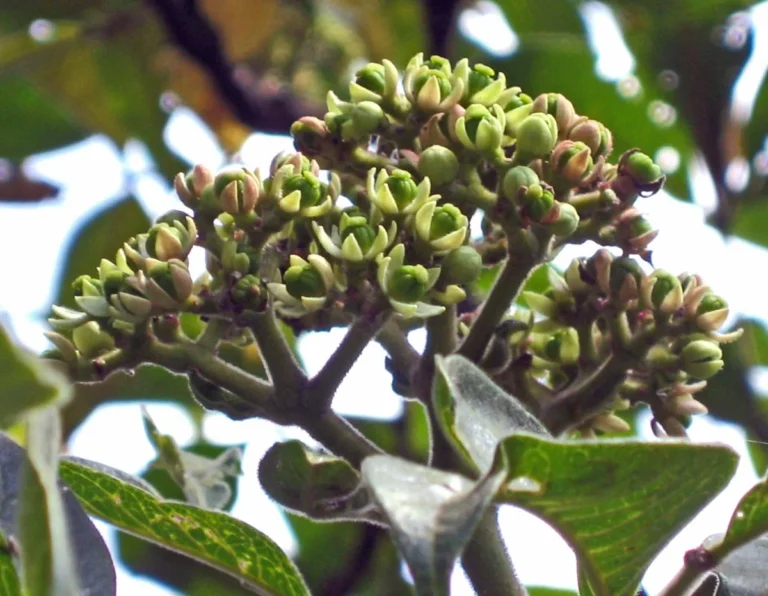
The same page gives the binomials. 吳茱萸 is Tetradium ruticarpum, family Rutaceae — the citrus and rue family. 食茱萸 is Zanthoxylum ailanthoides, also Rutaceae, the genus that gives Taiwan its 馬告 and Sichuan its peppercorn. Aromatic, resinous, sharp: exactly the profile you would want in a pouch worn against pestilence.
Dogwoods are Cornaceae. In Chinese that family is 山茱萸科 — the family is named after this very word. The Ministry of Education dictionary describes 山茱萸 as a deciduous tree of 山茱萸科 with four yellow petals and red fruit that can be used medicinally, and places it in 四照花屬, a genus most modern treatments fold into Cornus itself. Either way: Rutaceae on one side, Cornaceae on the other. Not neighbouring genera, different families.
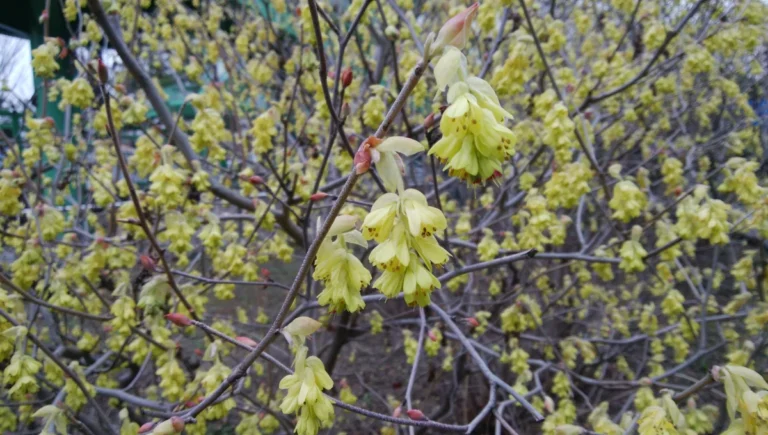
Here is where the English mistake stops being an error and becomes an inheritance. The dictionary’s entry for the bare word 茱萸 does not name one plant. It names three, and then quotes the Wang Wei line under all three:
為吳茱萸、食茱萸、山茱萸三種植物的通稱。舊時風俗於農曆九月九日折茱萸插頭,可以辟邪。唐.王維〈九月九日憶山東兄弟〉詩:「遙知兄弟登高處,遍插茱萸少一人。」
A collective term for three plants: wu zhuyu, shi zhuyu and shan zhuyu. It was formerly the custom on the ninth day of the ninth lunar month to break off zhuyu and put it in the hair, which could ward off evil. Tang, Wang Wei, “On the Ninth of the Ninth, Thinking of My Brothers East of the Mountains”: “I know from here where my brothers are climbing: every one of them with zhuyu in his hair, and one of them missing.”
Revised Mandarin Chinese Dictionary, ID 118051 (my translation)
Read it as a translator would. The word covers three plants, one of which is shan zhuyu, which sits in the dogwood family. The dictionary then hangs this exact poem on the collective entry. A translator who reaches for “dogwood” has taken one of the three branches the dictionary offers and followed it into English. The word was not mistranslated so much as flattened: a term with three referents was resolved to the one referent that had a ready English name, and the ready English name was the one from the wrong family.
So Taiwan’s education ministry lumps and Taiwan’s agriculture ministry splits, and the poem is stranded between them. This is not the first time the two halves of the record have pulled against each other on this site; the phrase mei xia yu kuang is a case where the same official dictionary prints the evidence that undoes its own ruling. What is different here is that the lumping entry is not wrong. 茱萸 genuinely is used for all three plants in Chinese, and the shared morpheme is why. The botanists are answering a narrower question — which plant was in the ninth-month pouch — and they answer it.
Worth noticing that the Chinese-language confusion and the English-language one are not the same size. Inside Chinese, people mix up 吳茱萸 and 食茱萸: same family, different genus, both aromatic, both plausible in a sachet. That is the mistake the forestry institute set out to correct. In English the word lands on a tree in a different family that is grown for its flowers. One is a slip of a rank; the other changes the plant.
Huan Jing’s cattle: where the origin story comes from
Every English page on the Double Ninth tells the same origin story. A man is warned by his teacher that disaster will strike his household on the ninth day of the ninth month; he is told to send everyone up a hill with red pouches of zhuyu and chrysanthemum wine; they go, they come back, the animals are dead and the family is not.
Almost none of those pages says where the story is from. It is from the 續齊諧記 (Sequel to the Records of Qi Xie), one scroll, by Wu Jun of the Liang dynasty, who died in about 520. The Ministry of Education dictionary defines the book in one sentence, and the sentence is the point:
書名。梁吳均撰。一卷。所記皆神怪之說。本莊子所云齊諧志怪之語以名其書。
Title of a book. Composed by Wu Jun of the Liang. One scroll. What it records are all tales of spirits and marvels. It takes its title from Zhuangzi’s phrase about Qi Xie recording strange things.
Revised Mandarin Chinese Dictionary via Taiwan’s Encyclopedia of Education (my translation)
A collection of marvels, and it names its ancestry in 莊子. Read in that light, the Huan Jing episode looks like what it is. The master tells him to have the household make red silk bags, fill them with zhuyu, tie them to their arms, climb high and drink chrysanthemum wine, 此禍可除 — the disaster can be averted. They come back at dusk to find the fowl, dogs, cattle and sheep 一時暴死, dead all at once. The teacher’s comment is that the animals could stand in for the family.
And then the passage closes by pointing at the present: 今世人九日登高飲酒,婦人帶茱萸囊,蓋始於此 — people nowadays climb high and drink on the ninth, and women carry zhuyu pouches; this is presumably where it began. (A note on the text: the Siku Quanshu transcription at the Chinese Text Project prints 曰 where every date in this passage requires 日 — 九月九曰 for 九月九日, and so on through the third and seventh months. The two characters differ by the length of one stroke and the scanning has run them together. I have given the date character as 日.)
“Presumably where it began” is a sixth-century writer looking at a custom that was already ordinary and supplying a cause for it. The custom is the evidence; the story is the explanation offered afterwards. That is the usual shape of these things, and it is the same shape as the dragon boat festival and Qu Yuan, where a practice older than the man it commemorates gets a biography attached.
The book itself is old enough to be worth citing. The Chinese Text Project’s bibliographic note records that the 續齊諧記 was already being quoted in the Sui dynasty catalogue, in Du Gongzhan’s commentary on the 荊楚歲時記, and in the Tang encyclopaedia 藝文類聚. So the Huan Jing story is genuinely early — it is just not history, and the earliest writer to tell it did not claim it was.
By Wang Wei’s century the festival needed no story at all. The dictionary’s entry for 重陽節 quotes Meng Haoran using the name the way one uses a date: 何當載酒來,共醉重陽節, when will you bring wine so we can get drunk together at the Double Ninth.
What Taiwan actually does on the ninth day
Gift money first, because it is the part with numbers. Taipei pays 重陽敬老禮金 to residents who have been registered in the city for at least three months as of the festival itself — for 2026 that means registered on or before 18 July. The scale, set out by the city’s social welfare department under the 臺北市重陽敬老禮金致送自治條例, runs NT$1,500 for those aged 65 to 84, NT$3,000 for 85 to 98, and NT$10,000 plus a gift for anyone 99 or over. For indigenous residents each band starts ten years earlier: 55, 75, 89. Collection points open for three days in the middle of October, with bank transfer in December for anyone who misses them.
Every other city and county runs its own version at its own rates, which is why “how much is the Double Ninth gift money” has no single answer in Taiwan and why the question trends here every autumn.
Then the kites. The proverb the district office at Shimen quotes on its kite festival page is 九月九,風吹滿天哮 — on the ninth of the ninth, the kites howl all over the sky. 風吹 is the Taiwanese word for a kite, and the same page notes the older idea of a kite as something that carries a year’s stale air away with it. The north coast has the wind for it in October, which is the prosaic reason the custom stuck there and not in the hills.
What Taiwan mostly does not do is climb. There is no national holiday, no closed office, no organised ascent. Chrysanthemums are a November and December affair: the Shilin Residence chrysanthemum show, Taipei’s largest autumn flower exhibition, opens weeks after the Double Ninth has passed, so even the flower has drifted off the date. The gap between the festival in the dictionary — climb, wine, sachet — and the festival in Taiwan — transfer, kite, visit to a grandmother — is wide, and it is the same gap that shows up when mid-autumn turns into a barbecue.
Common misconceptions
“Zhuyu is dogwood.” The plant in the ninth-month pouch is Tetradium ruticarpum, Rutaceae, per the Taiwan Forestry Research Institute. Dogwoods are Cornus, Cornaceae. The confusion is real and has a source — 山茱萸 is a dogwood and shares the word — but the poem is not about it.
“Wang Wei’s brothers wore Cornus officinalis.” This is English Wikipedia’s wording, and it is the dogwood branch of the collective definition printed as a settled fact.
“The festival began with Huan Jing.” The oldest telling of that story is in a Liang-dynasty collection of marvels which itself says the custom was already current and that the story is presumably its origin. Early, and not a chronicle.
“Taiwan made the Double Ninth Senior Citizens’ Day in 1966.” The year circulates widely in English and Wikipedia does cite a source for it — but the source is a dead link to an archived page from the Government Information Office, an agency that was itself abolished in 2012. It is a press release, not a statute or a gazette entry, and it is no longer retrievable at its original address. What remains checkable is narrower and does hold: the ministry’s dictionaries list 老人節 among the day’s names and record that it is designated 敬老節 in Taiwan. The designation is real; the date deserves a footnote of its own.
“Taiwanese people climb mountains and view chrysanthemums on the Double Ninth.” Neither is a live Taiwanese custom on that date. The kite is.
FAQ
When is the Double Ninth festival in Taiwan in 2026?
Sunday 18 October 2026 — the ninth day of the ninth month in the lunar calendar. It is not a public holiday in Taiwan: there is no day off and no compensatory day, and in 2026 the date happens to land on a Sunday anyway. Shops trade as usual.
What plant is zhuyu, if not dogwood?
Tetradium ruticarpum, in Chinese 吳茱萸, of the family Rutaceae — the rue and citrus family. It is aromatic and pungent, which is the point of wearing it. Dogwoods belong to Cornaceae, a different family. The Chinese word 茱萸 can cover three plants including one true dogwood, which is how the English mistake arose.
How much is Taipei’s Double Ninth gift money for 2026?
NT$1,500 for residents aged 65 to 84, NT$3,000 for 85 to 98, and NT$10,000 with a gift for those 99 and over, for anyone registered in the city on or before 18 July 2026. Indigenous residents qualify ten years earlier in each band. Other cities and counties set their own amounts.
Why do Taiwanese people fly kites on the ninth of the ninth?
Because the autumn wind on the north coast is right for it, and because the proverb says so: 九月九,風吹滿天哮. A kite was also understood as carrying illness and stale luck away from the person flying it.
Taiwan’s documented customs and its observed ones part company at Lunar New Year as well. The holiday statute, two Ministry of Education dictionaries and the Ministry of Environment’s refuse-collection timetable between them give six different lengths for the New Year taboo period, and not one of them is the fifteen days usually quoted — Chinese New Year taboos: what the rules protect.
Sources
- Ministry of Education, Revised Mandarin Chinese Dictionary, entry 重陽節: ID 126900 — nine as a yang number; climbing, chrysanthemum wine, zhuyu; 老人節 among the alternative names; the Meng Haoran line.
- Ministry of Education, Revised Mandarin Chinese Dictionary, entry 茱萸: ID 118051 — the collective definition covering three plants, with the Wang Wei line quoted under it.
- Ministry of Education, Revised Mandarin Chinese Dictionary, entry 山茱萸: ID 130742 — 山茱萸科, the dogwood family.
- Ministry of Education, Dictionary of Frequently-Used Taiwan Taiwanese, entry 重陽節: Tiông-iông-tseh — kite flying in Taiwan; the day designated 敬老節.
- Taiwan Forestry Research Institute, Ministry of Agriculture, Taipei Botanical Garden bulletin 42, 30 November 2011: the zhuyu in Wang Wei’s poem is 吳茱萸 — binomials and families for Tetradium ruticarpum and Zanthoxylum ailanthoides.
- Chinese Text Project, Quan Tang Shi juan 128: Wang Wei, 九月九日憶山東兄弟 — the text of the poem.
- Chinese Text Project, 續齊諧記: full text, Siku Quanshu edition and bibliographic note — the Huan Jing passage, and the record of early quotation in the Sui catalogue, Du Gongzhan’s commentary and the 藝文類聚.
- Ministry of Education, Encyclopedia of Education, entry 續齊諧記: tales of spirits and marvels.
- Department of Social Welfare, Taipei City Government: Double Ninth gift money, 2026 — amounts, age bands, residency cut-off of 18 July 2026, and the enabling city ordinance.
- Shimen District Office, New Taipei City: origins of the Shimen kite festival — the proverb 九月九,風吹滿天哮 and the kite as a carrier of misfortune.
- Witter Bynner’s rendering of the poem, with the dogwood, as reproduced at Wikiquote; Andrew W. F. Wong’s rendering and his note glossing zhuyu as dogwood at Classical Chinese Poems in English.
- English Wikipedia, “Double Ninth Festival” — the Cornus officinalis identification and the 1966 claim, both cited here as the things being checked.