Along Taiwan’s country roads, by riversides, at the edges of old cemeteries and sometimes in the middle of a city block, there are shrines too small to enter — three walls, a roof, an altar, a strip of red cloth over the opening — that English guidebooks call “ghost temples” and then leave alone. Their occupants are usually called 有應公, and the question what is a Youying Gong has a plain answer that the guidebooks skip: not a god, and not a ghost story, but the unclaimed dead of the island’s settlement — the bones of people who died of fever, or in the feuds between settler groups, or in rebellions, with no one to bury them properly and no descendants to feed them. The shrines are how a society made those bones safe. This entry sets out the system from the Ministry of the Interior’s reference entry, the Ministry of Education’s dictionary, Lien Heng’s history and a recent Taiwanese survey of the scholarship.
The official definition
The Interior Ministry’s Religion Knowledge+ entry on the subject opens with what the word denotes:
The Ministry of the Interior’s definition
有應公是有應公廟所祭祀的對象,祂們是沒有子孫供奉、不知姓名的枯骨,由於清領時期至台灣拓墾之移民,或因水土不服,或疫病、械鬥等各種因素客死他鄉,死後草草埋葬,日久容易曝露,墳墓經風雨沖擊損壞,枯骨四散各處,人見之恐懼,害怕無緣鬼魂作祟而建祠奉祀。
“Youying Gong are the objects of worship in Youying Gong shrines: dry bones without descendants to make offerings to them and without known names. Settlers who came to open up Taiwan in the Qing period died away from home — of the climate, of epidemics, of armed feuds and other causes — and were hastily buried; over time the graves were exposed, damaged by wind and rain, and the bones scattered. People who saw them were afraid, and fearing that the unrelated ghosts would make trouble, they built shrines and made offerings.”
內政部全國宗教資訊網「宗教知識+」〈有應公(Youying gong)〉 · religion.moi.gov.tw
Three things in that paragraph carry the whole subject. The dead are nameless — 不知姓名. They are without descendants — 沒有子孫供奉. And the motive for the shrine is fear, of what an unfed and unrelated ghost might do. In Taiwanese folk understanding, the Ministry goes on, every dead person becomes a ghost; a ghost with descendants who feed it is an ancestor, and protects the family; a ghost with none becomes a hungry ghost and harms the living. The Youying Gong shrine is the institution that takes the second kind and gives it a roof, an altar and a meal, so that it will not need to take them from anyone else.
A vocabulary of the unnamed
The name 有應公 means “the lord who responds”: short for 有求必應, “every request answered”, the four characters written on the red cloth over the shrine. But it is only the commonest of a long list, and the Ministry’s list is itself a piece of social history, because the dead are named by how they died. Those killed suppressing rebellions are 義民爺 or 忠勇公, righteous or loyal lords. Those killed in the feuds between settler groups are 老大公 or 義勇公. The general run of unclaimed bones take names from where and how they were gathered: 金斗公, “lord of the bone-jar”; 百姓公 and 萬姓公, “lord of the hundred surnames”, “lord of the ten thousand surnames”; 萬善公, “the ten thousand good”; 水流公 and 水流媽, “lord” and “lady of the flowing water”, for bodies the river brought; 大眾爺 and 大眾媽, “lord” and “lady of the multitude”; 大塚公 and 大墓公, “lord of the great grave”. Some shrines simply say “Lord So-and-so” or “Miss So-and-so”. And the Ministry records a career path: a shrine’s dead, if the local main temple’s god confers a rank on them, may be promoted to “General” or “Thousand Years”, and leave the category altogether — as the Hakka righteous-militia dead have done, becoming full gods.
Lien Heng’s General History of Taiwan (1920) lists such shrines county by county, and his notes show the naming happening in real time. Of the “Army Great King” temple at Puwei in Zhubei, built by the villagers in 1867, he writes:
以祀先民,無以名之,而稱為軍大王。按此地原為番界,瘴癘披猖,而我先民冒危難,闢土田,以殞歿於斯者,不知凡幾,故後人建廟祀之,以妥其靈,亦以追念遺烈也。
“It sacrifices to the early settlers; having no name to give them, they are called the Army Great King. This place was originally the aboriginal frontier, where miasmal fevers raged; our forebears braved the danger to open the fields, and those who perished here are beyond counting. So later generations built a temple to sacrifice to them — to settle their spirits, and also to commemorate what they left behind.”
“Having no name to give them”: that is the whole institution in five characters. Of the Wanshan temple at Dawo he writes only that it was built in 1855 “to sacrifice to those who died opening up aboriginal land”. The dead of the frontier were many, nameless and everywhere, and every shrine is a decision about what to call them.
Where the shrines came from: coffins, bone-jars and the state
The shrines look like folk improvisation, and by now mostly are. But their origin, as a 2024 survey for the history site StoryStudio by Lo Sung-yuan lays out, drawing on the work of Tai Wen-feng and Chen Wei-hua, was partly official. Qing law required every county seat to maintain a 厲壇, an altar to the unquiet dead of the four directions, and Taiwan’s magistrates did. Because Taiwanese custom set great store by burial geomancy, coffins were often left unburied for years while a site was found, or while relatives saved to ship the body back to Fujian — the government even ran a scheme for returning coffins across the strait — and the altar to the unquiet dead became, in Taiwan, a roofed building where coffins could be stored out of the rain and stray bones collected. The prefect Jiang Yuanshu’s illustrated account of his building works in Tainan in the 1770s includes a leaf on constructing the southern altar, its charity graveyard and its coffin-house. Private charity did the same: the Baozhong shrine at Fangliao in Xinpu began as a charity graveyard where villagers gathered the bones of the unclaimed after the Lin Shuangwen rebellion.
Lo, following Tai Wen-feng, makes a point that English writing misses entirely: the name 有應公 is not old. It does not occur in the Qing-period sources for Taiwan at all, which speak of “Great Multitude temples”, “Ten Thousand Good shrines”, “Thousand Family shrines” and “Southern Mountain temples”. Its first appearance in print is in 1901, in the journal of the Japanese colonial government’s survey of Taiwanese customs, and the red cloth reading “every request answered” is a Japanese-era feature. What changed was the state’s attitude. The Qing had run the altars; the Japanese classified them as 淫祠, illicit shrines, and evidence of native superstition — a colonial official, Zeng Jinglai, argued in 1938 that the whole cult should be abolished along with the earth burial that produced it, and his report fed into the temple-consolidation campaign. Stripped of official function and of the returning-coffins service, the dead in the shrines stopped being “strangers who died far from home” and became “local unclaimed bones that answer prayers”. The buildings shrank to the three-walled hut the Taiwanese call 三片壁仔, “three little walls”.
Why they answer everything
The Ministry’s entry states the theology bluntly, and it explains both the appeal and the disrepute:
民間相信有應公不論好事壞事均有求必應,貶惡揚善為神明的職責,但有應公則善惡不分,為庶民滿足其生活慾望大開方便之門,有求必應,這說明有應公並非正神,並帶有厲鬼的氣息。
“People believe that the Youying Gong answer every request, good or bad alike. To punish evil and promote good is the duty of a god; the Youying Gong make no distinction between good and evil, and open wide a door of convenience for ordinary people to satisfy the desires of daily life. This shows that the Youying Gong are not orthodox gods, and carry something of the air of the vengeful ghost.”
A god, in this system, is a moral agent and will refuse a prayer for a winning lottery number, a rival’s misfortune or money without work. A nameless dead man is under no such obligation. That is why, when the underground lottery known as 大家樂 swept Taiwan in the 1980s, the Youying Gong shrines were where the punters went. Lo’s survey records the scene: gamblers praying between eleven at night and one in the morning, the hour when yin and yang change over and the dead are thought most responsive; the most efficacious shrines booked up with puppet-theatre performances, paid for by winners in thanks, weeks in advance; graveyards lit up at midnight. The anthropologist Hu Tai-li wrote the classic study of the lottery and its gods in 1989. The Ministry’s entry, without mentioning the lottery, records the principle that made it possible.
The other side of the same principle is the proverb that every Taiwanese speaker knows, which the Ministry of Education’s dictionary gives under its entry for the term:
The proverb
少年若無一擺戇,路邊哪有有應公。
“If young men never did one foolish thing, where would the roadside Youying Gong come from?”
教育部《臺灣台語常用詞辭典》「有應公」條 · sutian.moe.edu.tw
The dictionary’s definition of the term itself — “ownerless lonely souls; that is, wandering ghosts, mostly the bones of those who died violently, whose native place and name are unknown or who left no heirs; usually buried where found, with a small shrine built for people to worship” — makes the proverb’s logic plain. The shrines are where the young men who died in the feuds ended up. To say “the roadside is full of Youying Gong” is to say the island’s history is full of violent, unnecessary death.
How to recognise one, and what happens there
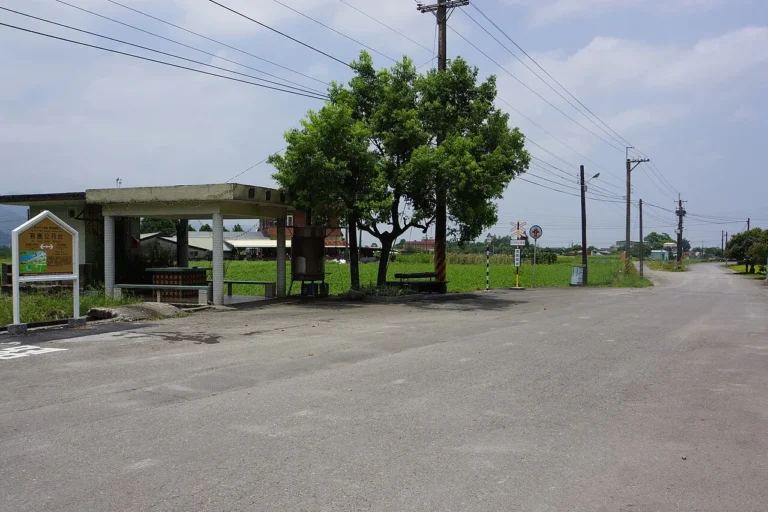
The Ministry gives the field marks. A Youying Gong shrine is usually small and built where the bones were found or where the people died; it has no door and no door-gods; a red cloth hangs over the lintel, reading “every request answered”; and the roof ridge carries none of the upturned fish-tails or figures that an ordinary temple has. Some, with many worshippers, have grown into buildings indistinguishable from temples. Offerings are cooked food and meat, and the paper money burned is silver, the kind given to the dead, not the gold given to gods. There is no fixed festival; the main occasions are the seventh lunar month — Ghost Month, when all the unclaimed dead are fed — and the tomb-sweeping festival in spring. For what the seventh month involves, and which of its rules are documented, see Ghost Month in Taiwan.
One more thing the sources make clear. The Youying Gong are the bottom of a hierarchy, not outside it. Above them are the Lords of the Multitude, the 大眾爺, who have crossed over into being judges of the underworld, and above those the City God — the chain of courts before which Taiwanese swear oaths and file complaints against the living. That legal side of the dead is the subject of why people swore oaths before Chinese gods. A shrine that answers every request and a court that punishes perjury are two ends of a single idea: the dead are still here, and they can be dealt with. For the manners that apply in the halls of either, see Taiwan temple etiquette.
FAQ
Is a Youying Gong a god?
No. The Ministry of the Interior’s entry defines them as nameless dead without descendants — settlers who died of disease, in feuds or in rebellions and were never properly buried — housed in shrines so that they will not trouble the living. It states that they are “not orthodox gods” because, unlike gods, they answer bad requests as well as good.
What does 有求必應 mean?
“Every request answered” — the words on the red cloth over the shrine, from which the name Youying Gong, “the lord who responds”, is abbreviated. The phrase and the cloth date from the Japanese period; the term does not occur in Qing sources, which used names like Great Multitude temple and Ten Thousand Good shrine.
How do I recognise a Youying Gong shrine?
Small, often three-walled, with no door and no door-gods, a red cloth over the opening and a plain roof ridge without ornament. Offerings are cooked food; the paper money is silver rather than gold. Most are on roadsides, riverbanks or old burial grounds.
Why do gamblers pray to Youying Gong?
Because the unclaimed dead, having no moral office, are believed to grant requests a god would refuse. During Taiwan’s underground-lottery craze of the 1980s the shrines were crowded with punters seeking numbers at midnight; the Ministry’s entry records the underlying belief that they “make no distinction between good and evil”.
Sources
- 內政部全國宗教資訊網「宗教知識+」〈有應公(Youying gong)〉 — religion.moi.gov.tw:定義;依死因之各種稱呼;升格為將軍/千歲;廟形(無門、無門神、紅布、無脊飾);「並非正神,並帶有厲鬼的氣息」;祭期(七月、清明)與祭品(熟食葷食、銀紙);參考戴文鋒、黃文博、高賢治 (accessed 5 Sep 2026)
- 教育部《臺灣台語常用詞辭典》「有應公」Iú-ìng-kong 條及諺語「少年若無一擺戇,路邊哪有有應公」 — sutian.moe.edu.tw (accessed 5 Sep 2026)
- 連橫《臺灣通史》卷二十二・宗教志(新竹縣):軍大王廟「以祀先民,無以名之,而稱為軍大王……」;萬善廟「以祀拓殖番地而死之人」;集義亭、褒忠祠 — 維基文庫 (accessed 5 Sep 2026)
- 羅崧源〈【臺灣通史】清代移民魂斷異鄉的悲歌,如何成為賭徒眼中有求必應的有應公?〉,故事 StoryStudio,2024-12-15 — storystudio.tw:「有應公」一詞首見 1901《臺灣慣習記事》;戴文鋒考清代文獻無此稱;祭厲制度、厲壇、蔣元樞〈建設南壇義塚並殯舍圖說〉、運柩制度;褒忠亭義塚;日治淫祠論與曾景來 1938;三片壁仔;1980 年代大家樂;引戴文鋒《臺灣風物》46:4(1996)、陳緯華《民俗曲藝》183(2014)、胡台麗 1989 (accessed 5 Sep 2026)