Writing about Chinese culture in English has a quality problem, and it is structural: much of it is written at several removes from anything anyone ever wrote in Chinese, English summarising English. This page says how this library avoids that — which editions are read, how translations are made, how the commentary tradition is handled, and what happens when something turns out wrong.
How an entry is made
Every entry is checked against the primary sources before it is published. The reading of the original text, the judgment of authenticity, the final seal — all of it is mine alone, and nothing is published that I have not read.
In practice: a draft arrives with the passage, a citation and a deep link to the text. I open the link, read the passage in classical Chinese, and either sign it off or send it back. An entry with no decision recorded against it is not published — not as a draft, not as a stub, not at all. The queue is built so that “not yet read” and “read and confirmed” can never be mistaken for one another.
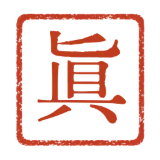
The seal at the foot of an entry — the small one bearing 真 — marks that this has happened. It is not decoration and it is not applied by a machine.
How quotations are labelled
Most entries on this site are simply the tradition set out in English. Quotations are the exception: because so many famous lines in English were never in the Chinese, each one carries a label saying where it actually stands.
- Authentic — the line is genuinely in the source text, and the citation on the page is where it appears.
- Misattributed — the line is not in the source and was not said by the person it is credited to.
- Paraphrased — a real passage stands behind the line, but the wording in circulation is not a translation of it.
- Unverified — no primary source has been found either way. This is recorded as an open question, not as a falsehood. A site that never says “I don’t know” is not being careful.
Which sources I use
Every entry rests on at least one primary text or official reference work. Encyclopaedias are used as leads, never as the citation of record.
- Pre-Qin and Han texts — Chinese Text Project (ctext.org), which carries the original text with James Legge’s translation in parallel and gives every chapter a stable address.
- Buddhist canon — CBETA, maintained by Dharma Drum Institute of Liberal Arts.
- Character forms — the Taiwan Ministry of Education Dictionary of Chinese Character Variants (2024 edition) and the Revised Mandarin Chinese Dictionary.
- Character evolution — Academia Sinica’s Xiaoxuetang databases, for oracle-bone through regular-script forms.
- Western scholarship — the Stanford Encyclopedia of Philosophy for the English-language academic frame, and the standard translations (Legge, D. C. Lau, Slingerland) for comparison.
- Misquotation trails — Quote Investigator, Google Books and the Internet Archive, for the earliest datable appearance in English.
- Living practice — the Ministry of the Interior’s Taiwan religious culture map and Academia Sinica’s cultural-resources GIS, for temples, deities and festivals.
Citations are deep links. A link that lands on a homepage instead of the passage is not a citation, and I treat it as an unfinished entry.
How I translate
Translations on this site are my own unless a translator is named. They aim at what the Chinese says, not at what sounds best in English. Where my rendering departs from Legge or Lau, the entry says so and shows theirs. Where a passage is genuinely contested among commentators, the entry gives the readings rather than picking one silently.
The commentary tradition matters here. A line of the Analects read through Zhu Xi is not the same line read through the Han commentators, and pretending otherwise is how a text gets flattened. Where a commentary decides the meaning, the entry names the commentator.
What I will not do
- I do not teach internal alchemy or any transmitted practice. I am a lay student, not a master, and a lineage is not mine to hand on.
- I do not offer readings, consultations or personal interpretation.
- I do not use AI-generated images. Reproductions of Chinese art and calligraphy are public-domain works from museum open-data collections, and the holding institution is always named. Photographs of living practice — temples, processions, festivals — are Creative Commons images (CC BY or CC BY-SA), with the photographer and licence named in the caption. Character cards are set in real typefaces, not drawn.
- I do not put an entry behind a paywall. The original text, the citation and the verdict are free on every page, permanently.
When I get it wrong
Corrections are dated, published, and left in place — the corrections log is a permanent record, not a cleanup. If you find an error, write to me; if the correction stands, you will be credited on the entry unless you would rather not be.
Reuse
The verdicts and the quote database are published under CC BY 4.0: reuse them freely, including commercially, with attribution to Vermilion Seal. The classical texts themselves are in the public domain. See open data for the machine-readable copy.