Why this site exists
Chinese civilisation has been writing itself down for well over two thousand years, and it has never stopped arguing with itself. The Analects and the Tao Te Ching are not scripture handed down intact; they are books that generations of readers fought over, annotated and passed on. That long conversation is one of the great intellectual inheritances of the world, and most of it has never been carried into English with any care.
Vermilion Seal exists to carry it across properly: the texts, the concepts they use, the characters they were written in, and the practice that still surrounds them in daily life — set out in English with the Chinese beside it, so a reader who has no Chinese can still see what is actually there.
Doing that well means occasionally having to say that a famous line is not in the text. That is a consequence of the work, not its purpose. The purpose is the tradition itself.
What makes this site different
It goes back to the texts. Not summaries of summaries — the Analects, the Tao Te Ching, the dynastic histories, read in classical Chinese. Every entry links to its primary source, so the tradition speaks in its own words and you can check mine against it.
It comes from Taiwan. Taiwan is one of the few places where Chinese civilisation’s traditional written characters, temple life, and festival calendar remain everyday reality — practised continuously, and changed by that practice, as living traditions are. What you read here is not museum culture reconstructed from books; it is reported from inside that life.
Traditional characters, always. Every Chinese term on this site appears in the traditional characters in which the tradition wrote itself for two thousand years. This is not nostalgia; it is accuracy.
A human seal on every entry. Every claim, every character and every source citation is checked against the original, by a reader of the original language, before anything is published. Nothing appears on this site unverified. When I get something wrong, the correction is public, in the corrections log.
No incense-scented marketing. This site will not help you find your inner peace, unlock ancient secrets, or manifest abundance. It will show you what the tradition actually says, in the words it says it in, and let you make of that what you will.
The knowledge itself is free. Original texts, translations, citations and sources — all of it, no paywall, and the quote database is openly licensed (CC BY). Study editions are in preparation, and once they exist they will be the way to support the work; but an inheritance this old should not sit behind a payment form.
Who I am

My name is Lin Chan Ching. I live in Taiwan, and I have spent over a decade reading the classical tradition — the Confucian canon, the Daoist texts, and the I Ching — including a period of training as a lay student at a Daoist temple in Taiwan. I say “lay student” plainly, because plainness is the point of this site: I am not a master, and I will never claim a lineage I do not hold. What I bring is the ability to read the sources in their original language, and the discipline to show you exactly where everything comes from.
A note on my English
These translations are my own. My English is a practitioner’s English, not a copywriter’s. Where my rendering differs from the classic translations (James Legge, D. C. Lau), I note it. Where I am uncertain, I say so. If a sentence here reads like no native speaker would write it — that is the price of getting the Chinese right, and I will take that trade every time.
The two seals
There are two seals on this site, and the difference between them is the whole idea.
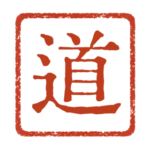
The seal at the top of every page bears 道 — the way: the road, the method, and the tradition this library is about. It is the name over the door.
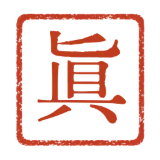
The smaller seal at the foot of an entry bears 真 — true, genuine. In Chinese painting and calligraphy a vermilion seal is what authenticates a work: pressed by the artist, or later by an owner vouching for it. That one is not decoration. It appears only where a person has read the passage in the original and is willing to stand behind it.
知之為知之,不知為不知,是知也。
“To say you know when you know, and to say you do not when you do not — that is knowledge.”
Analects 2.17 · Check the original at ctext.org