David Beckham’s rib tattoo quotes the Analects of Confucius — and gets two characters wrong. Shawn Marion asked for his nickname and walked out with “Demon Bird Camphor.” Somewhere between those two outcomes sits every celebrity Chinese tattoo ever inked, and the distance between them is worth measuring character by character. This page checks seven famous cases against the dictionary and, where a classical source exists, against the source.
The examples below are the ones I could verify against photographs or a documented analysis. Where the record is secondhand, I say so. This is written from Taiwan, in traditional characters, with the classical citations linked to the full original text.
David Beckham: the Analects, two characters adrift
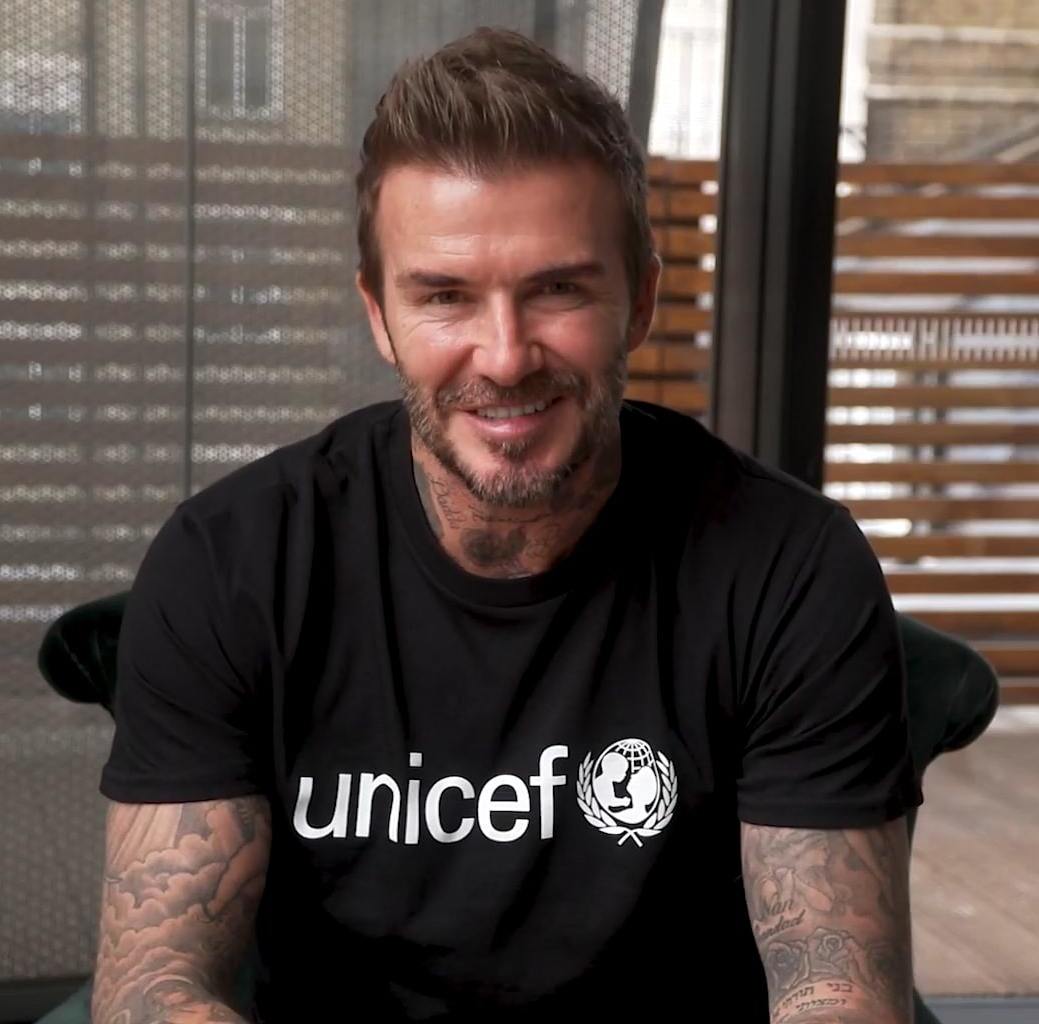
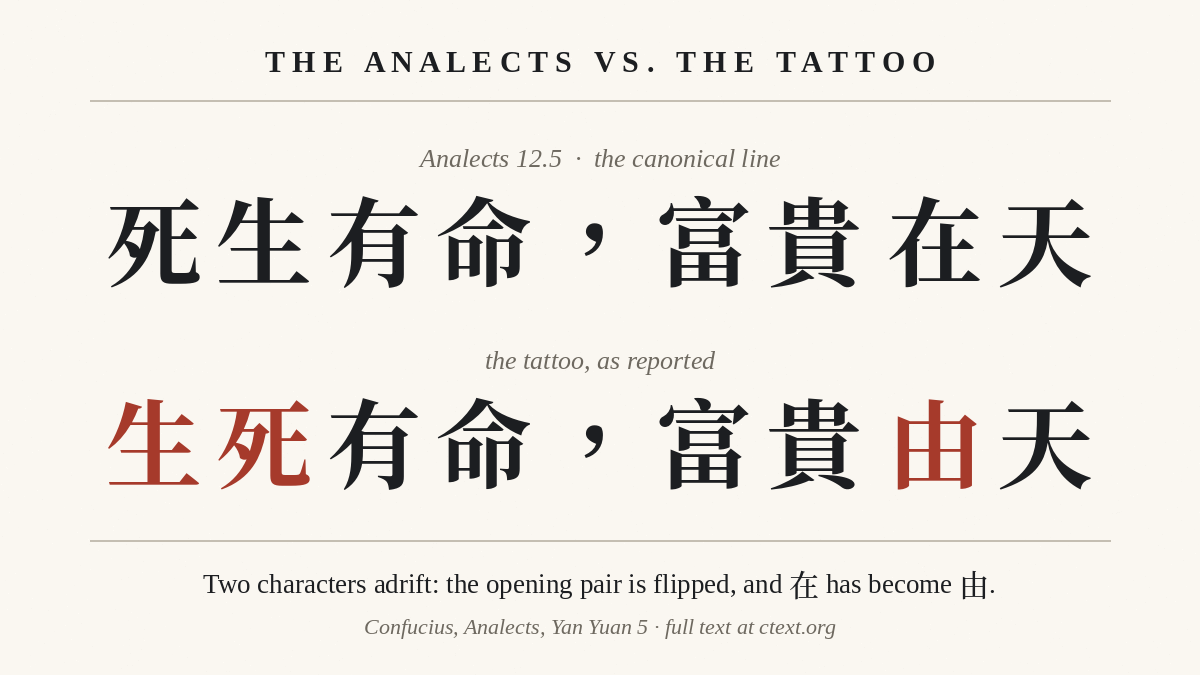
The best-known Chinese tattoo in the world runs down Beckham’s left side in cursive script — the flowing “grass script” that trades legibility for speed and elegance. Hanzi Smatter, the long-running blog that catalogues misused Chinese characters in Western culture, reviewed it in 2008 and passed it: real characters, real syntax, real meaning. By celebrity standards that already puts it in the top tier.
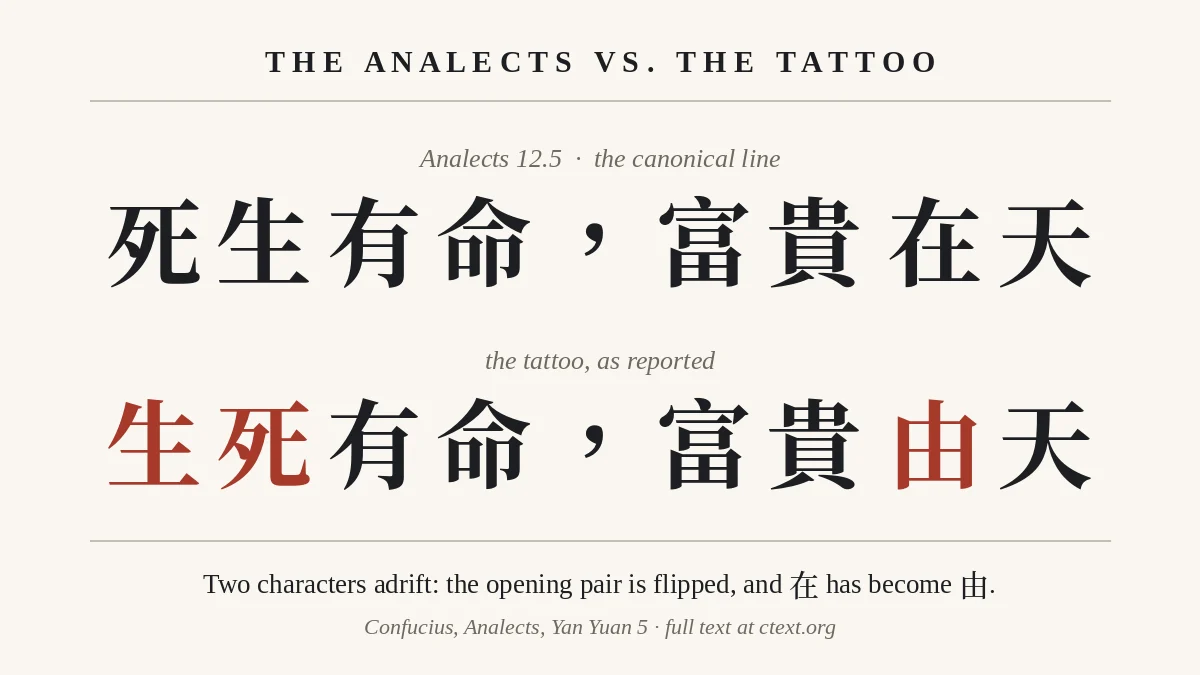
The phrase is usually transcribed 生死有命,富貴在天 — “life and death are a matter of fate; wealth and honour rest with Heaven.” Asia Society and an account attributed to the Hong Kong artist who inked it render the last clause 富貴由天 — “up to Heaven” rather than “rests with Heaven.” Either way, the line has a pedigree most tattoos can only gesture at. It comes from the Analects, Book 12. Sima Niu is despairing that every man has brothers except him, and Zixia answers with something he once heard:
死生有命,富貴在天
Death and life have their determined appointment; riches and honours depend upon Heaven. (Analects 12.5, Legge’s translation)
Put the canonical line next to the tattoo and two differences surface. The original opens 死生 — death before life — and the tattoo flips it to 生死, which is how the phrase circulates in modern speech. And the original says 在天 where at least some transcriptions of the tattoo say 由天. Neither change makes the tattoo gibberish; a Chinese reader understands it instantly and most would place the quote. But it is a quotation that has drifted from its source, the way “money is the root of all evil” drifts from “the love of money.” If the point of citing a classic is the classic, the wording is 死生有命,富貴在天 — and that is checkable in ten seconds against the full text.
One more detail worth stealing from this case: Zixia’s line is not fatalist resignation. His answer continues — conduct yourself with respect and courtesy, “and all within the four seas will be his brothers.” The quote’s actual argument is that you should stop despairing over what you cannot control and work on what you can. Beckham, knowingly or not, picked a line whose context improves it.
Three single characters that hold up
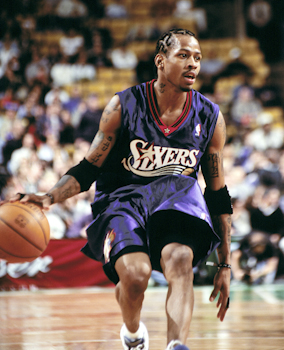
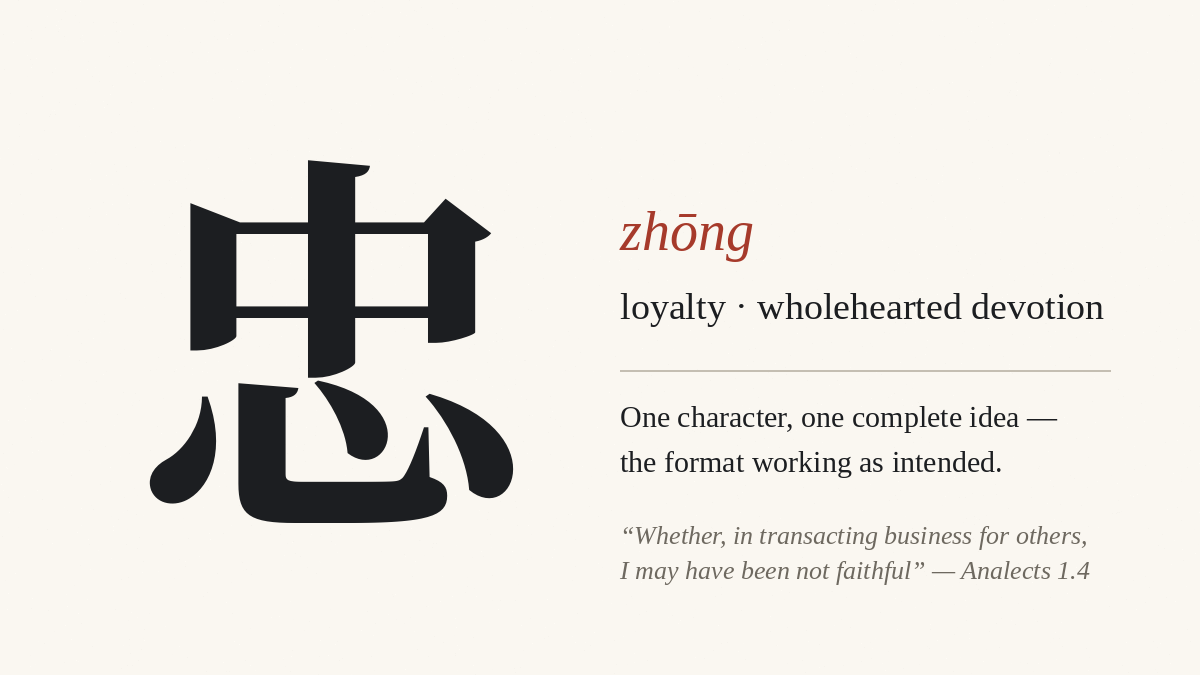
Allen Iverson’s neck carries 忠 — loyalty, single character, correctly written. This is the format working as intended. 忠 is not a fragment of a word; it is a complete Confucian concept with twenty-five centuries of commentary behind it. It is one of the things Master Zeng examines himself on daily in Analects 1.4: “whether, in transacting business for others, I may have been not faithful.” A single character can carry a tattoo when the character is itself a complete idea.
Chris Andersen — the NBA’s “Birdman” — took the pairing approach: 好 on one forearm, 惡 on the other. Good and evil. Both characters are correct, and the pair is more literate than it first looks: 好惡, read hào wù, is itself a classical word meaning “what one loves and what one hates” — one’s likes and dislikes. The Analects uses exactly this pair when it says only the truly humane person can rightly love and rightly hate. Two arms, one coherent idea.
Justin Bieber’s 曲 — song, tune, melody — is also a real, correctly written character, with one asterisk a dictionary check would have surfaced: read qǔ it means a song; read qū it means bent or crooked. Context normally settles it, but a lone character on skin has no context. As a music reference it holds; it simply holds less firmly than 忠, because 忠 means loyalty at any reading and 曲 needs the reader to pick the right one.
Shawn Marion: how “The Matrix” became “Demon Bird Camphor”
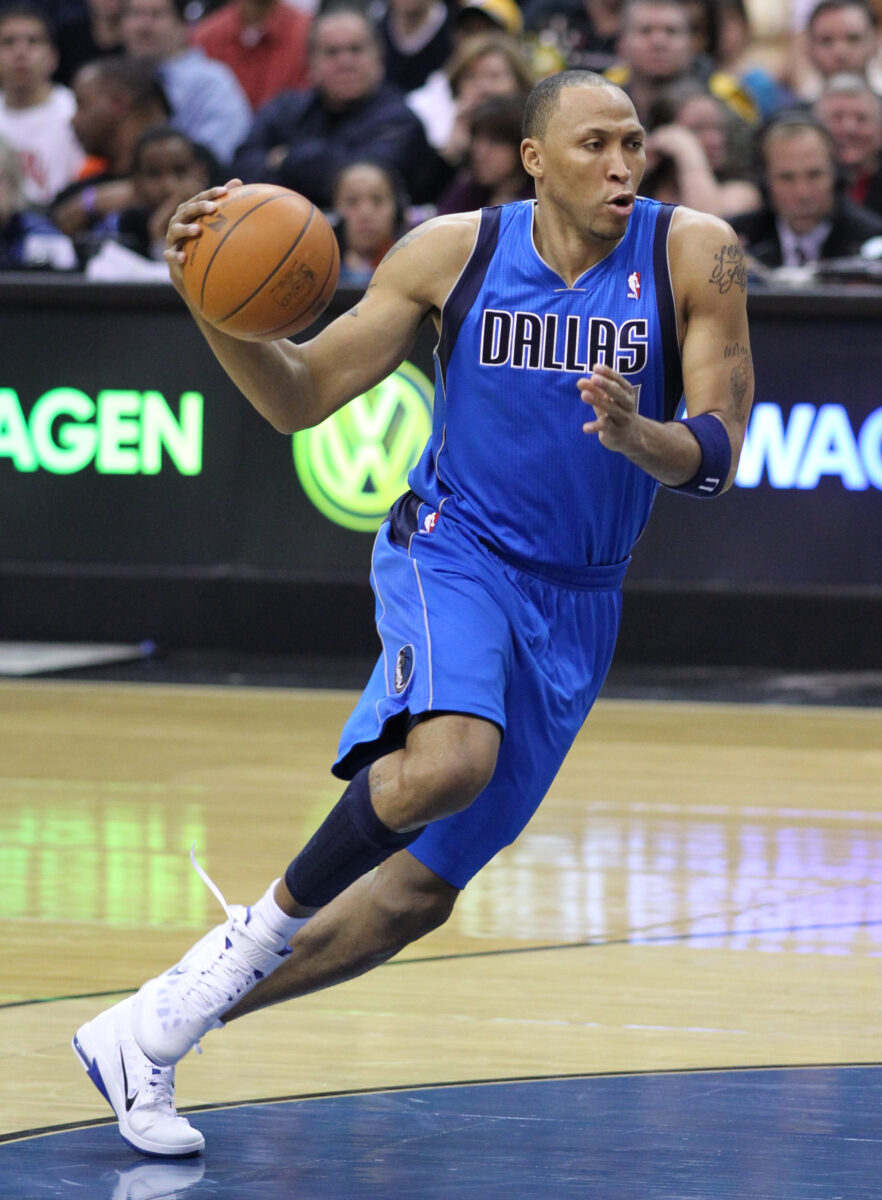
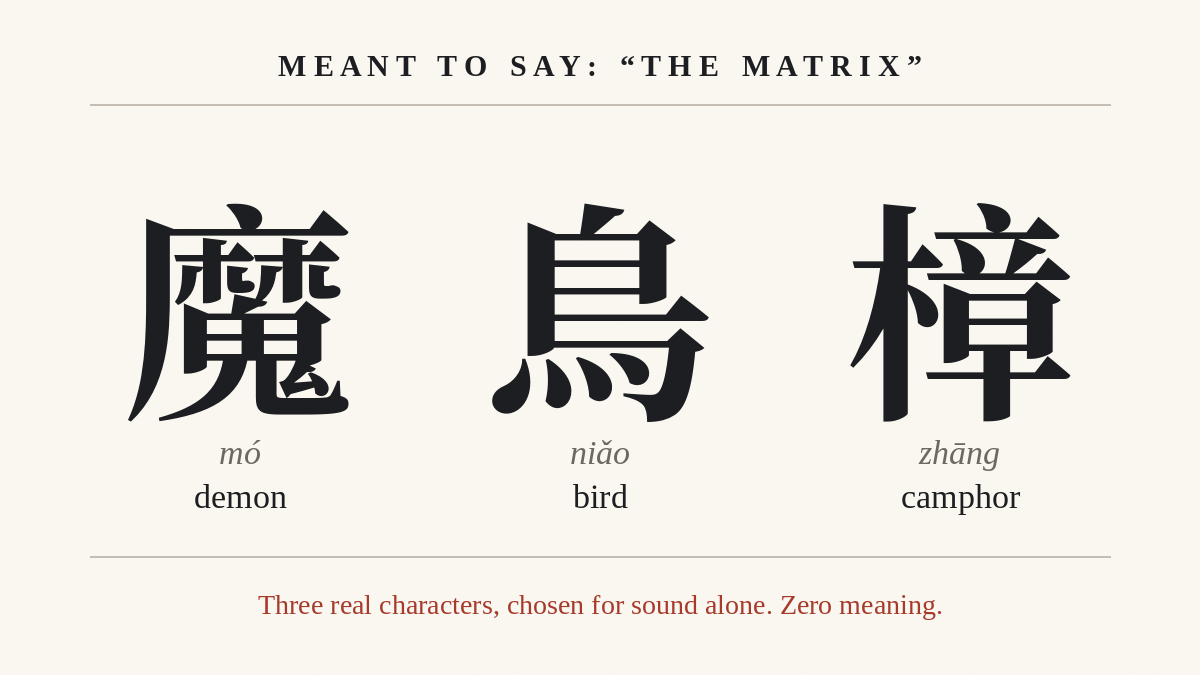
Marion’s nickname was “The Matrix.” He wanted it on his leg in Chinese. What he got, as documented at Hanzi Smatter in 2005, was 魔鳥樟: demon (or magic), bird, camphor — the tree whose extract goes into mothballs. Chinese-speaking fans read it as roughly “Demon Bird Mothballs.”
The failure mode here is specific and worth naming: transliteration by syllable. Someone tried to make characters sound like an English word, one syllable at a time, and Chinese characters do not work that way — each one carries meaning whether you want it to or not. There were real options. The film is titled 黑客帝國 in mainland China and 駭客任務 in Taiwan; the mathematical matrix is 矩陣. Any of these would have been a translation. 魔鳥樟 is noise that happens to be pronounceable.
Marcus Camby: two real characters, zero real words
Camby’s arm reads 勉族 — reportedly intended as “strive for the family.” Look each character up and nothing is wrong: 勉 is to strive or exert oneself; 族 is a clan, tribe, or people. Put them together and you have a word that does not exist. No dictionary lists 勉族; no Chinese speaker would produce it. The English equivalent would be tattooing “strivetribe” on your arm — both halves are in Webster’s, and the whole is in nothing.
This is the subtlest of the failure modes, because a character-by-character check passes. The unit of Chinese meaning is usually the word, not the character, and words have to be looked up as words.
Britney Spears: the near-synonym trap
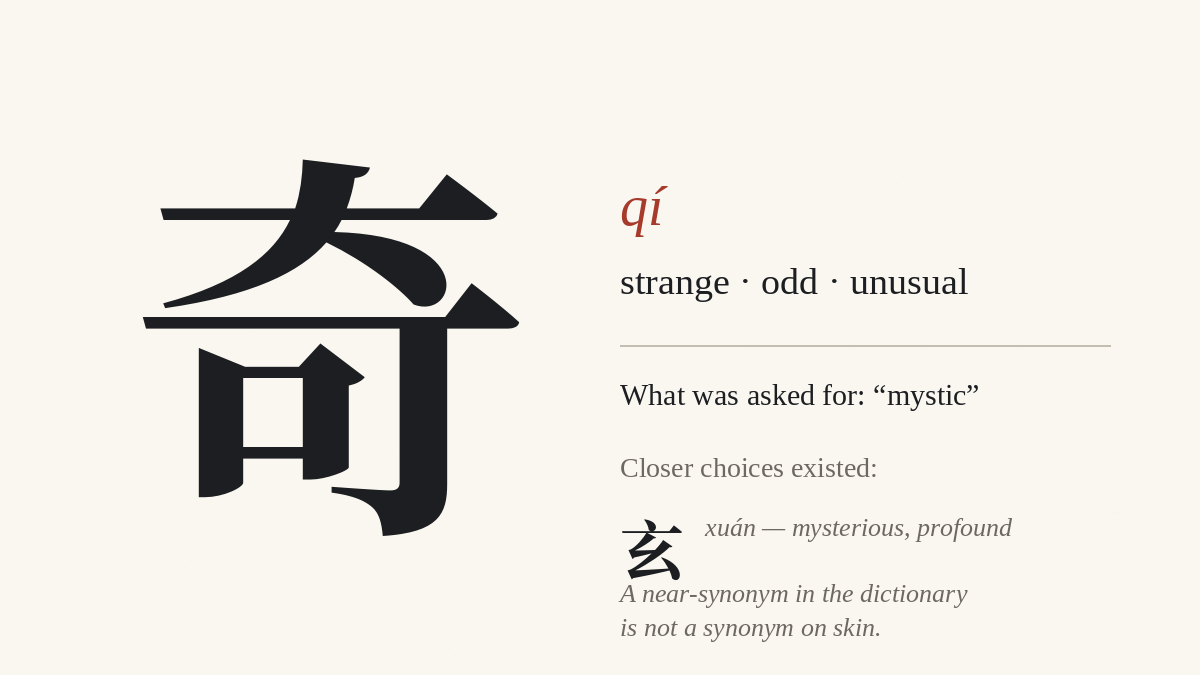
The story, repeated across two decades of tattoo journalism, is that Spears wanted “mystic” and her hip tattoo instead reads 奇 — strange, odd, unusual. I could not trace this one to a first-hand source or a clear photograph, so treat the details as reported rather than verified; it stays in this list because the mistake it describes is real and common whoever it happens to. 奇 does sit in the same neighbourhood as “mystic” — it can mean rare or marvellous — but its everyday reading is “weird.” The character a translator would actually reach for is 玄 (mysterious, profound) or the word 神秘. Near-synonyms in a dictionary are not interchangeable on skin, and the difference between “mystical” and “strange” is the difference between the tattoo you asked for and the one you explain for the rest of your life.
What seven cases add up to
Sort the seven and a pattern shows: the tattoos that work are complete ideas — a whole classical quotation, a single character that is a whole concept, a documented two-character word. The tattoos that fail were assembled — from syllables in Marion’s case, from dictionary fragments in Camby’s, from a near-synonym in Spears’s. Beckham’s case is the instructive middle: even a genuinely literate tattoo drifted two characters from the canon, because nobody checked the source. The check would have cost nothing. The original is online, free, in full.
If you are considering a Chinese character tattoo yourself, the five specific ways one goes wrong — writing system, font, size, word boundaries, and meaning — are laid out in our guide, Chinese Tattoo Mistakes: The Five Ways a Character Goes Wrong, with the reference dictionaries to run each check against. Every character on this page links back to a text you can verify. That is the standard a permanent decision deserves.
Sources
- Analects, Yan Yuan (Book 12) — Chinese Text Project, with Legge’s translation
- Hanzi Smatter: David Beckham’s Chinese Tattoo (2008)
- Hanzi Smatter: Shawn Marion — The Matrix (2005)
- Asia Society: Is David Beckham’s Chinese Tattoo a Statement of Confucian Philosophy?
- Wikipedia: Chinese character tattoo
- NPR: Chinese Character Tattoos: Lost in Translation (2006)